Are you concerned about the cholesterol on your plate?
“Cholesterol is not considered a nutrient of concern for overconsumption,” the latest Dietary Guidelines for Americans says.
That means: You don’t need to worry about cholesterol in your food.
Why not? There’s a growing consensus among scientists that cholesterol in food has little effect on the amount of cholesterol in the bloodstream. And that’s the cholesterol that matters.
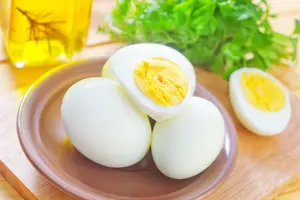
Since the first Dietary Guidelines for Americans was published in 1980, we have been advised to limit our dietary cholesterol intake (e.g. egg yolks, shrimps, liver) to lower our cholesterol levels. They have advised us to restrict our dietary cholesterol intake to no more than 300 mg daily. While the recommendation to limit dietary cholesterol sounds perfectly logical, it turns out that the problem is more complicated than it looks.
The demand for cholesterol in our bodies is pretty high. Its primary function is to maintain the integrity and flexibility of all cell membranes and serve as a precursor for the synthesis of vital substances for the organism, including steroid hormones, bile acids, and vitamin D.
The body regulates how much cholesterol is in your blood. About 85% of the cholesterol in the circulation is manufactured by the body in the liver. It isn’t coming directly from the cholesterol that you eat. It would be hard to get it entirely from food (unless you eat about eight egg yolks every day). So, the liver has to produce most of it to meet the requirements. Furthermore, our body is so clever that it can slow down cholesterol production in the liver if we get a lot of it from food.
Within our body, cholesterol is carried by different lipoprotein particles, and those particles, in various circumstances, might promote either health or disease. The various lipoprotein molecules, which carry cholesterol, determine the level of risk or protection against CVD, not the cholesterol within them.
Although dietary cholesterol has no impact on blood cholesterol levels for most people, people with certain health problems, such as diabetes, should continue to restrict cholesterol-rich foods. Insulin resistance can lead to increased cholesterol production by interfering with the liver’s mechanism that controls its production.
In some people, high-cholesterol foods raise blood cholesterol levels due to their genetic predisposition. These people make up about 40% of the population and are often referred to as “hyper responders.” However, even though dietary cholesterol modestly increases LDL in these individuals, it does not seem to increase their risk of heart disease. This is because the general increase in LDL particles typically reflects an increase in large LDL particles — not small, dense LDL. People who have mainly large LDL particles have a lower risk of heart disease.
For decades, people have been told that the dietary cholesterol in foods raises blood cholesterol levels and causes heart disease. This idea may have been a rational conclusion based on the available science 50 years ago, but more recent evidence doesn’t support it. Most people can adapt to a higher cholesterol intake, and dietary cholesterol has little effect on blood cholesterol levels. And most foods that are high in cholesterol are also super nutritious and can be a great addition to a heart-healthy, diverse and well-balanced diet.
Did you like this article and want more tips and advice?
Reference
U.S. Department of Health and Human Services and U.S. Department of Agriculture. 2015 – 2020 Dietary Guidelines for Americans. 8th Edition. December 2015. Available at http://health.gov/dietaryguidelines/2015/guidelines/.
* DISCLAIMER: The content of this article is not intended to constitute or be a substitute for professional medical advice, diagnosis, or treatment. Always seek the advice of your doctor or other qualified health care provider with any questions you may have regarding a medical condition. Never disregard professional medical advice or delay in seeking it because of something you have read in any media published by myself.