
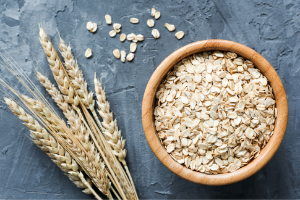
Why oats are good for optimal cholesterol
No doubt you’ve heard about the heart health benefits of consuming oats. That’s partly because oats are good sources of the soluble fibre called beta-glucan.
Dietary fibre is the part of plant-based food that mostly passes through the digestive system without breaking down or being digested. There are two types of fibre: soluble and insoluble.
Many studies have shown the beneficial effect of fibre-rich foods, both insoluble and soluble, on obesity, cardiovascular diseases, and type 2 diabetes. Diets rich in fibre improve glycemic control in type 2 diabetes, reduce low-density lipoprotein (LDL) cholesterol in hypercholesterolemia, and contribute positively to long-term weight management.
Soluble fibre slows digestion by forming a gel in your digestive tract and is the fibre associated with lowering cholesterol.
Beta-glucan is a type of soluble fibre readily available from oat and barley grains. It has gained significant interest due to its multiple functional and bioactive properties.
Many studies have confirmed its beneficial role in insulin resistance, dyslipidemia, hypertension, and obesity.
Of all fibres, beta-glucan health benefits have been the most extensively documented. Moreover, no human adverse effects have been reported after consuming a diet rich in beta-glucan from oat or barley flour or their extracts. Because of that, using health claims with beta-glucan-containing foods have been allowed in several countries.
Among cereals, the highest beta-glucan content has been reported for barley: 2–20 g (per 100 gr of dry weight) and for oats: 3–8 g (per 100 gr of dry weight). The beta-glucan content varies depending on the variety when it grows in the field. Other cereals also contain beta-glucan but in much lower amounts. Other sources of beta-glucan include some types of seaweed and various species of mushrooms such as Reishi, Shiitake, and Maitake.
In a meta-analysis of randomized clinical trials, consuming 3 to 10 g of barley beta-glucan per day over 4 to 6 weeks significantly lowered total and LDL cholesterol in subjects with different dietary patterns. In another meta-analysis, participants receiving 3 to 10 g of barley beta-glucan per day, over a duration ranging between 4 and 12 weeks, had significant reductions in total cholesterol, LDL cholesterol, and triglycerides compared to the control group participants, irrespective of fat content in the diet.
Oat beta-glucans were also found to be enormously effective in modifying blood lipid parameters. The US Food and Drug Administration (FDA) and Health Canada have accepted 3 g as an adequate daily intake of oat beta-glucan to reduce serum LDL cholesterol. Also, FDA approved a health claim stating that beta-glucan from whole oats, oat bran, and whole oat flour might reduce the risk of heart disease. This is because this fibre can lower the levels of total and LDL cholesterol in your blood, both of which are risk factors for heart disease. According to one study, consuming 3 grams of beta-glucan per day for eight weeks decreased LDL cholesterol levels by 15% and reduced total cholesterol by nearly 9%. Beta-glucan is also rich in antioxidants (compounds that can help neutralize harmful free radicals) and prevents inflammation (significant in the development of atherosclerosis).
Oats are one of the most versatile sources of beta-glucan. Besides oatmeal, they’re a great topping for yoghurt and make a heart-healthy addition to smoothies, pancakes, baked goods, and more. You can also try making convenient overnight oats for an easy breakfast. On average, one cup of cooked oatmeal has 2 grams of beta-glucan, and one cup of cooked pearled barley has 2.5 grams.
Enjoy your daily oatmeals!
Did you like this article and want more tips and advice?
* DISCLAIMER: The content of this article is not intended to constitute or be a substitute for professional medical advice, diagnosis, or treatment. Always seek the advice of your doctor or other qualified health care provider with any questions you may have regarding a medical condition. Never disregard professional medical advice or delay in seeking it because of something you have read in any media published by myself.