Is it worth spending money on organic?
On many occasions I have been asked why I spend extra money on organic food, and why I recommend others to do the same. So here is a short summary of my reasons for buying organic.
Organic standards
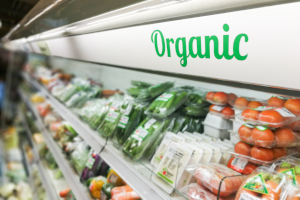
There are almost 300 pesticides routinely permitted in non-organic farming, and these are often present in the non-organic food we eat. In contrast, the standards for organic food are very strict. These rules are laid down in European law, and any food labelled as organic must meet exacting criteria. Organic farming must be free of synthetic pesticides, and absolutely no herbicides such as glyphosate may be utilised. In terms of pesticides, organic farmers can choose from just 20, which are all derived from natural ingredients. The very highest standards of animal welfare must be adhered to, with animals reared free of the routine drugging, antibiotics and wormers common in intensive livestock production. This all has a positive effect, as up to 50% more wildlife can be found on organic farms than on traditional ones. This is because significantly less water and soil contamination is produced than in standard farming practices. Nature is allowed to thrive and such farms become safe havens for wildlife and provide shelter for bees, birds and butterflies (1).
More of the good and less of the bad.
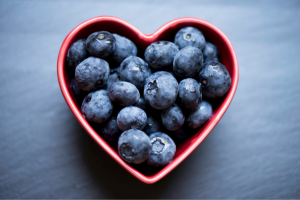
How we farm also affects the quality of the food we eat, for example, in terms of nutrient density. Research published in the British Journal of Nutrition found significant differences between organic and non-organic farming. A meta-analysis of 343 peer-reviewed publications comparing organic to non-organic crops, found organic crops contained substantially higher concentrations of a range of antioxidants and other potentially beneficial compounds (between 19% and 69%). Additionally, the frequency of occurrence of pesticide residues was found to be four times higher in conventional crops, alongside significantly higher concentrations of the toxic metal cadmium. Non-organic fruit had the highest pesticide frequency (75%), compared to non-organic vegetables (32%) and non-organic crop-based processed foods (45%), whilst pesticide residues were found in only 10% of organic crop samples (2).
The most recent study evaluating the impact of an organic diet found that after only six days of eating organic food, adults and children had a significant reduction (between 26% and 95% depending on pesticide metabolite being measured) in the levels of synthetic pesticides in their urine, compared to with a conventional diet (3).
Pesticide consumption and health concerns.
Pesticide consumption is linked to a variety of health concerns. Scientists concluded in one of the systematic reviews: “There is a huge body of evidence on the relation between exposure to pesticides and elevated rate of chronic diseases such as different types of cancers, diabetes, neurodegenerative disorders like Parkinson’s, Alzheimer’s, birth defects, and reproductive disorders. There is also circumstantial evidence on the association of exposure to pesticides with some other chronic diseases like respiratory problems, cardiovascular disease, chronic nephropathies, auto-immune diseases like systemic lupus erythematosus and rheumatoid arthritis, chronic fatigue syndrome, and ageing” (4).
As an example, a study published in December 2018 found that among nearly 69,000 participants, those with the highest frequency of organic food consumption had 25% fewer cancers than individuals who did not eat organic food (5).
Another study published in the same year found a strong correlation between the consumption of foods high in pesticide residues and fertility issues. These issues included lower probabilities of clinical pregnancy and live birth among women undergoing infertility treatment (6).
For a practical tip-off on how to increase your consumption of organic food click here
Did you like this article and want more tips and advice?
References:
1. Soil association UK https://www.soilassociation.org/organic-living/why-organic/.
2. Barański, M., Srednicka-Tober, D., Volakakis, N., Seal, C., Sanderson, R., Stewart, G. B., … Leifert, C. (2014). Higher antioxidant and lower cadmium concentrations and lower incidence of pesticide residues in organically grown crops: a systematic literature review and meta-analyses. The British journal of nutrition, 112(5), 794–811. doi:10.1017/S0007114514001366 https://www.ncbi.nlm.nih.gov/pubmed/24968103
3. Carly Hyland, Asa Bradman, Roy Gerona, Sharyle Patton, Igor Zakharevich, Robert B. Gunier, Kendra Klein, (2019) Organic diet intervention significantly reduces urinary pesticide levels in U.S. children and adults. Environmental Research, 171, p.568-575. doi.org/10.1016/j.envres.2019.01.024. https://www.sciencedirect.com/science/article/pii/S0013935119300246
4.Mostafalou,S. Abdollahi, M.(2013) Pesticides and human chronic diseases: Evidences, mechanisms, and perspectives,. Toxicology and Applied Pharmacology, 268,(2) p. 157-177, doi.org/10.1016/j.taap.2013.01.025.https://www.ncbi.nlm.nih.gov/pubmed/23402800
5. Baudry J, Assmann KE, Touvier M, et al. (2018) Association of Frequency of Organic Food Consumption With Cancer Risk: Findings From the NutriNet-Santé Prospective Cohort Study. JAMA Intern Med., 178(12)p.:1597–1606. doi:10.1001/jamainternmed.2018.4357 https://jamanetwork.com/journals/jamainternalmedicine/article-abstract/2707948
6. Chiu Y, Williams PL, Gillman MW, et al. (2018) Association Between Pesticide Residue Intake From Consumption of Fruits and Vegetables and Pregnancy Outcomes Among Women Undergoing Infertility Treatment With Assisted Reproductive Technology. JAMA Intern Med., 178(1):17–26. doi:10.1001/jamainternmed.2017.5038 https://jamanetwork.com/journals/jamainternalmedicine/fullarticle/2659557
* DISCLAIMER: The content of this article is not intended to constitute or be a substitute for professional medical advice, diagnosis, or treatment. Always seek the advice of your doctor or other qualified health care provider with any questions you may have regarding a medical condition. Never disregard professional medical advice or delay in seeking it because of something you have read in any media published by myself.

Dirty dozen and clean fifteen